Technology
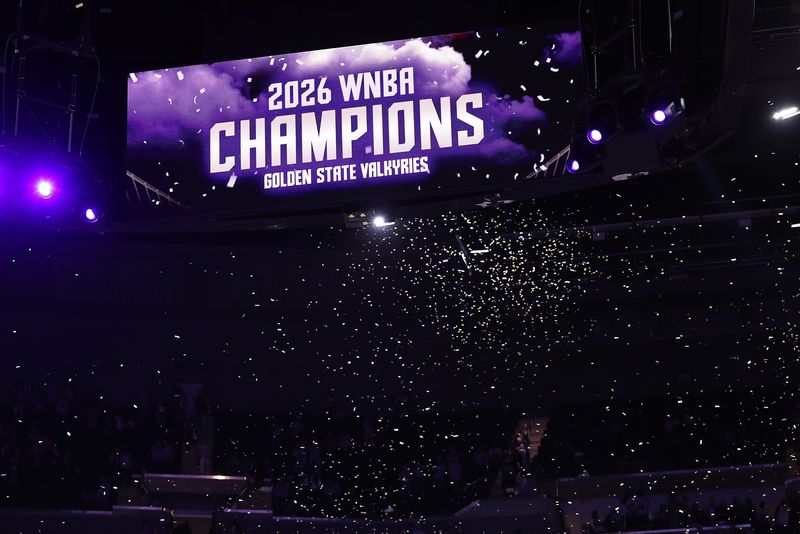
Record 3.3M tuned in for WNBA’s first-ever Game 7
By Carlos Martinez
Advertisement · Why this ad?
Jenna Larson has been reporting on the Fargo region for over 15 years. She graduated from North Dakota State University and began her career at The Forum of Fargo-Moorhead before joining the Bison Current network. Jenna's focus is on community events, local initiatives, and the stories that make Fargo unique.
More from Jenna →
As the clock struck 3:30 a.m. EST on November 3, 2023, a piece of humanity's quest for knowledge began its final descent. The Neil Gehrels Swift Observatory, a satellite telescope that had spent nearly 22 years unraveling the mysteries of the cosmos, was making its fiery re-entry into Earth's atmosphere. For astronomers and space enthusiasts alike, this moment was bittersweet, marking the end of an era filled with groundbreaking discoveries.
The Swift Observatory, weighing approximately 3,200 pounds (1,452 kg), was expected to burn up upon re-entry, with NASA stating that the chances of any debris causing harm to populated areas were minimal. According to the US Space Force, the odds of injury to anyone on Earth were estimated at one in 2,100. These statistics provided some comfort, but they could not overshadow the significance of what Swift had accomplished during its operational years.
Launched in 2004, the Swift satellite was a pioneering multi-wavelength observatory designed to study gamma-ray bursts and other cosmic phenomena. With a budget of $500 million, Swift quickly became a cornerstone of astronomical research, allowing scientists to observe the universe in ways that were previously unimaginable. Its array of three telescopes enabled it to capture data across various wavelengths, providing a comprehensive view of cosmic events.
However, as the satellite drifted toward its inevitable demise, astronomers had hoped for a miracle. In July, a rescue mission was launched by NASA in collaboration with the Arizona-based startup Katalyst. The mission aimed to send a specially designed vehicle named LINK to rendezvous with Swift, latch onto it, and pull the observatory into a higher, more sustainable orbit. Unfortunately, the mission faced challenges early on, as LINK began spinning uncontrollably shortly after launch, leading mission managers to abandon the effort by mid-August.
The news of Swift's re-entry has resonated with the scientific community and space enthusiasts around the world. Many have expressed their gratitude for the contributions the observatory has made over the years. Dr. Emma Torres, an astrophysicist at North Dakota State University, reflected on Swift's legacy: "The Swift Observatory has fundamentally changed our understanding of the universe. Its ability to capture gamma-ray bursts in real-time has opened new avenues for research and collaboration among scientists globally."
Local residents in Fargo have also been following the story closely, with many attending public talks and events centered around space exploration. The Fargo-Moorhead community has a rich history of supporting educational initiatives in science and technology, and the impact of Swift’s discoveries has reached into classrooms across the region. Schools have incorporated lessons about gamma-ray bursts and the importance of space exploration into their curricula, sparking interest among students.
As Dr. Torres noted, "The excitement of space exploration is contagious. Swift has inspired countless students to pursue careers in STEM fields, and its legacy will continue to influence future generations of scientists and engineers." The observatory's impact extends beyond the confines of academia; it has sparked a passion for discovery that resonates deeply within the community. Local science fairs now feature projects inspired by Swift’s findings, showcasing the creativity and curiosity of young minds.
The failed rescue mission also highlights the challenges faced by space agencies as they develop new technologies. The LINK mission was not just an attempt to save Swift; it was a test of a new orbital grappling technology that could have significant implications for future satellite maintenance and even military applications. Katalyst, which designed and built the LINK vehicle under a $30 million NASA contract, touted the mission as a historic endeavor.
Despite the setback, the lessons learned from the LINK mission will inform future efforts in space exploration. As Dr. Torres remarked, "Every failure in space exploration teaches us something valuable. The challenges we face today will only make us stronger and more innovative in the future." The spirit of resilience and commitment to progress is a testament to the dedication of those in the field. The failure of the LINK mission has spurred discussions among engineers and scientists about improving the reliability of such technologies, ensuring that future missions benefit from these hard-earned insights.
Throughout its mission, the Swift Observatory has made significant contributions to our understanding of the universe. Originally designed for a two-year prime mission, Swift exceeded expectations by continuing to operate for nearly two decades. It has provided invaluable data on a wide range of cosmic objects, including galaxies powered by supermassive black holes, stars emitting X-ray flares, and even comets and asteroids within our solar system.
One of the most remarkable achievements of the Swift Observatory was its ability to observe gamma-ray bursts—powerful explosions that occur when massive stars collapse or neutron stars collide. These events are among the most energetic phenomena in the universe and can help scientists unlock the secrets of cosmic evolution. Swift's real-time observations allowed astronomers to study these bursts in unprecedented detail, leading to groundbreaking discoveries that have reshaped our understanding of stellar life cycles.
Moreover, Swift's legacy extends beyond its scientific contributions. The observatory has fostered collaboration among international space agencies and researchers, creating a global network of scientists dedicated to understanding the cosmos. This spirit of cooperation is essential in an era where space exploration is becoming increasingly competitive. The partnerships formed during Swift's mission have laid the groundwork for future collaborative projects, paving the way for shared missions that can tackle even more ambitious scientific questions.
As the Swift Observatory bids farewell to its place in the cosmos, the future of space exploration remains bright. The challenges faced during the LINK mission have underscored the importance of innovation and adaptability in the field. NASA and its partners are already looking ahead to new missions that will continue to push the boundaries of our understanding of the universe. Projects like the James Webb Space Telescope and the upcoming Lunar Gateway are poised to expand our horizons and deepen our knowledge of space.
In Fargo, the spirit of curiosity and exploration lives on. Local schools and organizations are actively engaging students in STEM education, ensuring that the next generation is equipped to tackle the challenges of tomorrow. The legacy of the Swift Observatory will undoubtedly inspire future scientists and engineers to reach for the stars. Community events, such as science nights and hands-on workshops, are becoming more frequent as interest in space exploration surges, further embedding this passion into the local culture.
As we reflect on Swift's contributions, we are reminded of the importance of commitment—both in our personal lives and in the pursuit of knowledge. Just as strong marriages and intact families form the backbone of our communities, so too do our collective efforts in science and exploration shape the future of humanity. The American dream of discovery and understanding continues to thrive, fueled by the passion and dedication of those who dare to dream. The story of Swift is not just one of a satellite; it is a testament to human perseverance and the relentless pursuit of knowledge.
By Carlos Martinez

By Tommy Anderson

By Sofia Martinez

By Tommy Anderson